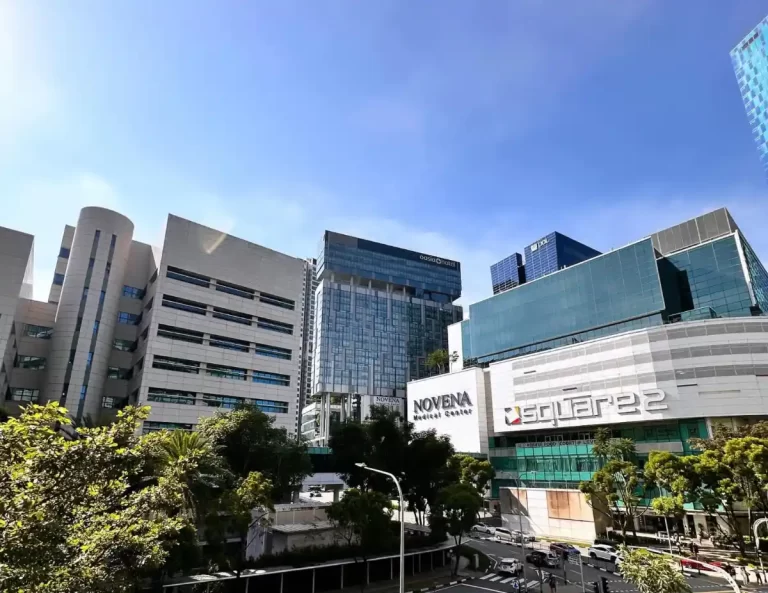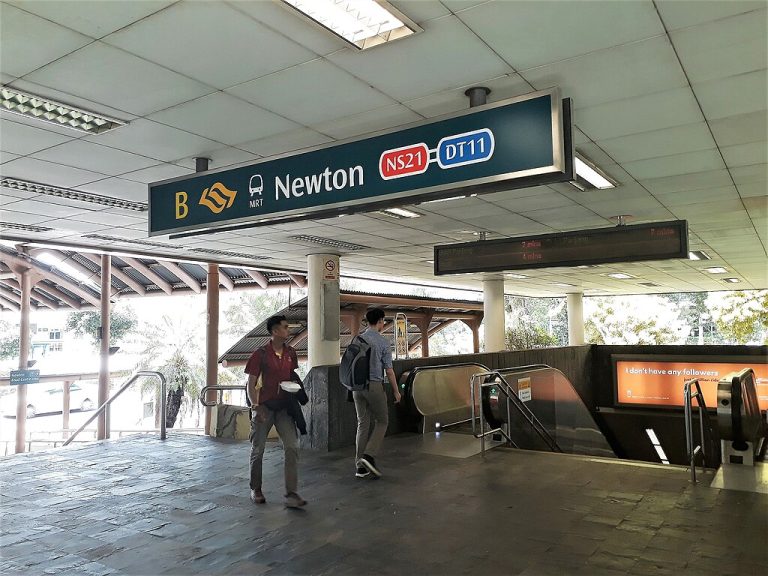
Most property buyers know Novena as “the one with the hospitals.” Far fewer understand that the precinct is halfway through a two-phase government masterplan that will reshape it well into the 2030s — and that the second phase was only launched in September 2025.
If you are weighing up a home purchase in District 11, the medical hub is usually mentioned as a bullet point. Close to Tan Tock Seng. Near Mount Elizabeth Novena. Good for doctors.
That framing undersells what is actually happening. HealthCity Novena is a 17-hectare integrated healthcare precinct being built out under a masterplan launched by the Ministry of Health in 2013. Phase 1 is now complete. Phase 2 — the larger and more transformative half — was formally launched on 9 September 2025 and is still in front of us.
For anyone buying property in the area, that timing matters. You are not buying next to a finished amenity. You are buying next to a precinct that will keep adding capacity, staff and daily footfall for years to come. This article looks at what has been built, what is coming, and what it realistically means for property owners nearby.
What HealthCity Novena Actually Is
HealthCity Novena was launched on 30 August 2013 by the then Minister for Health. The plan was to intensify 17 hectares of land around Tan Tock Seng Hospital and turn the campus into a single integrated healthcare ecosystem rather than a cluster of separate institutions.
The precinct sits between Moulmein Road and Irrawaddy Road. Healthcare has been on this site since Tan Tock Seng Hospital relocated to Moulmein Road in 1909, and over the following century Dover Park Hospice, Ren Ci Community Hospital, the National Skin Centre and the National Neuroscience Institute all took root nearby.
What the masterplan added was coordination. Rather than each institution expanding on its own, the campus is being developed against a single long-term blueprint with defined objectives: support new models of care, handle future pandemics more effectively, advance medical education and research, and — notably for residents — connect the campus to the communities around it.
The point about connectivity is easy to skip past, but it is significant.
Phase 2 explicitly includes healing spaces, green corridors and walking trails intended to link the campus internally and to its external surroundings. A hospital campus designed to be walked through rather than around is a different kind of neighbour.
Phase 1: What Has Already Been Delivered
More than a decade on, Phase 1 is complete. Four developments define it.
The National Centre for Infectious Diseases
The NCID opened in 2019 with 330 beds. Tan Tock Seng had long been the hospital associated with infectious disease management in Singapore, having played a central role during SARS in 2003 and H1N1 in 2009. The new facility opened months before COVID-19 arrived and became a central part of the national response.
Innovation and medical education
The Ng Teng Fong Centre for Healthcare Innovation and the Lee Kong Chian School of Medicine’s Clinical Sciences Building anchor the research and teaching side of the campus. Together with NHG Health and TTSH, they form an academic health system where clinicians, researchers and industry partners work in the same precinct.
This is the part with the most direct bearing on housing demand. A teaching and research campus does not just employ clinical staff — it brings faculty, research fellows, postgraduate students and visiting academics, many on multi-year postings.
The TTSH Integrated Care Hub
The Integrated Care Hub was built to smooth the transition from acute care to rehabilitative care and then home. It also houses Dover Park Hospice, integrating palliative care into the same building rather than treating it as a separate destination.
The renewed National Skin Centre
The new National Skin Centre opened in 2023 with double its previous capacity. According to MOH, median waiting time for appointments has since fallen from 50 days to 34 — a reduction of around 30 per cent.
Phase 2 Is the Bigger Half — And It Has Only Just Begun
On 9 September 2025, Minister for Health Ong Ye Kung launched the second phase of the masterplan. If Phase 1 was about adding specialised facilities, Phase 2 is about scale.
The centrepiece is the proposed TTSH Medical Tower, to be built on the existing CDC 2 and Annex 2 building sites. As set out by MOH, it is envisaged to add around 600 acute beds plus additional specialist outpatient clinics.
There is also an opportunity, described in the same address, to relocate the Emergency Department into larger purpose-built premises within the Medical Tower — giving it direct access to operating theatres, specialist outpatient clinics and procedural suites.
Phase 2 at a glance
- Proposed TTSH Medical Tower on the CDC 2 and Annex 2 sites
- Around 600 additional acute beds
- Additional specialist outpatient clinics
- Possible relocation of the Emergency Department into the new tower
- Healing spaces, green corridors and walking trails across the campus
- Three distinct campus zones: Specialist, Community and Future HealthSpaces
- Block 505, one of the historic Pavilion Wards, to be retained in the new development
On timing, the Minister noted that the tower will adopt standardised design principles drawn from the Woodlands Health and Eastern General campuses, with the aim of building faster than the decade such projects typically take. No completion date has been committed publicly, and the masterplan itself is framed as “2030 and beyond.” Anyone quoting you a firm completion year for the Medical Tower is guessing.
What This Means for Property Owners Nearby
Here is where property commentary usually overreaches, so it is worth being careful about which claims are supportable and which are not.
What can reasonably be said
The tenant pool is structural, not cyclical. Hospitals, specialist centres and a medical school generate employment that does not switch off in a downturn. Doctors, nurses, allied health professionals, researchers and faculty need to live within reasonable reach of the campus, and shift patterns make proximity genuinely valuable rather than merely convenient. That is a different demand profile from a district dependent on one industry or one office cluster.
Capacity is still being added. Six hundred additional acute beds, more outpatient clinics and possibly a relocated emergency department imply more staff, not fewer. Whatever demand exists today for housing near the campus, the direction of travel points upward.
The campus is being made more liveable. Green corridors, walking trails and public-facing spaces change how a hospital precinct feels to live beside. This is a deliberate objective of the masterplan, not an incidental benefit.
Land nearby is genuinely constrained. Novena is a mature, built-up area. New residential sites come mainly from redevelopment and en bloc sales rather than fresh land release, which limits how quickly supply can respond to demand.
What should not be claimed
None of this guarantees capital appreciation. Property prices respond to interest rates, cooling measures, stamp duties, the broader economy and overall supply — not only to local amenity. A strong precinct improves the odds; it does not remove the risk.
Rental yields are not automatically higher. Prime central district properties often trade at prices that compress yields relative to suburban alternatives. Reliable tenant demand and high yield are two different things, and Novena tends to offer the former more than the latter.
Construction has real costs while it happens. A multi-year build programme means construction activity, hoarding and traffic for a period. Buyers holding for the long term may accept this readily; anyone planning to sell within a few years should factor it in.
The honest summary: Novena’s medical hub is one of the more durable demand anchors in Singapore residential property. It supports a consistent tenant profile and it is still expanding. It does not, on its own, make any particular property a good buy at any particular price.
Why New Freehold Supply Here Is So Limited
The final piece is supply. Novena sits within District 11, part of the Core Central Region, and it is comprehensively built out. Most new residential projects here arise from collective sales or the redevelopment of older, smaller sites — a slow and unpredictable pipeline.
Freehold sites are scarcer still. The Government does not release freehold land through the Government Land Sales programme, so freehold plots come to market almost exclusively through en bloc sales and private redevelopment. Each one is essentially a one-off.
That is the structural reason freehold launches in this part of Singapore attract attention out of proportion to their size. It is not marketing language — it is a consequence of how land supply works here.
Looking at a home in the Novena precinct?
The Serra Residences is a freehold development of 133 homes at 7 Bassein Road, District 11, within walking distance of Novena MRT and the HealthCity Novena precinct. Previews are scheduled from 19 September 2026.
The Bottom Line
Novena’s status as a medical hub is not a marketing line attached to whatever project happens to be launching. It is a government masterplan with a decade of delivered infrastructure behind it and a second, larger phase now underway.
For a buyer, the useful conclusion is narrow but real: the demand anchor here is unusually durable, the supply response is unusually slow, and the precinct is still being improved rather than merely maintained. Those are favourable structural conditions.
They are not a substitute for doing the arithmetic on the specific unit, at the specific price, against your own holding period and financing. Buy the property on its merits. Treat the precinct as the reason those merits are likely to hold.
Sources: Ministry of Health, Speech by Minister Ong Ye Kung at the Launch of HealthCity Novena Master Plan 2030 and Beyond, 9 September 2025; Tan Tock Seng Hospital, HealthCity Novena.
This article is provided for general information only and does not constitute financial, investment or legal advice. Property values can rise and fall, and past performance is not indicative of future results. Prospective buyers should seek independent professional advice before making any purchase decision.